
Zuper XR is Zuper LED’s solution for extended reality (XR) virtual production. According to Zuper LED’s website, it combines high-performance LED walls with precision tracking and real-time rendering systems to create fully immersive and dynamic environments.
In practice, Zuper XR enables you to build virtual sets — LED walls that display realistic backgrounds in real time, synchronized with camera movement — so filmmakers, event producers, and brands can shoot in-camera without relying solely on green screens.
“filmmakers, event producers, and brands can shoot in-camera without relying solely on green screens.”
Shashi Kiran
Industry’s standard dummy text ever since the when an unknown printer took a galley of type and scrambled it to make a type specimen book. It was popularised in the 1960s with the release of Letraset sheets containing Lorem Ipsum passages.
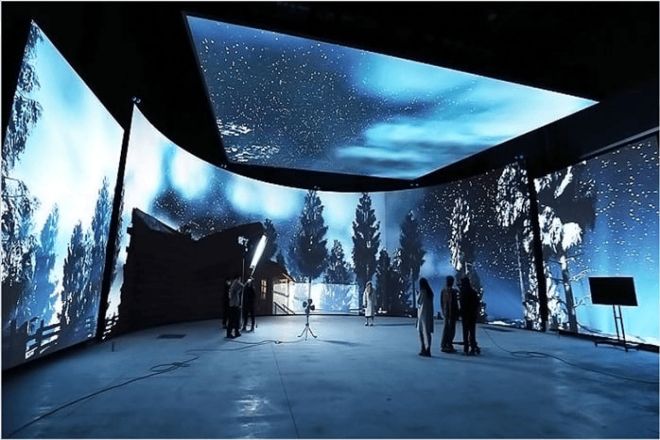
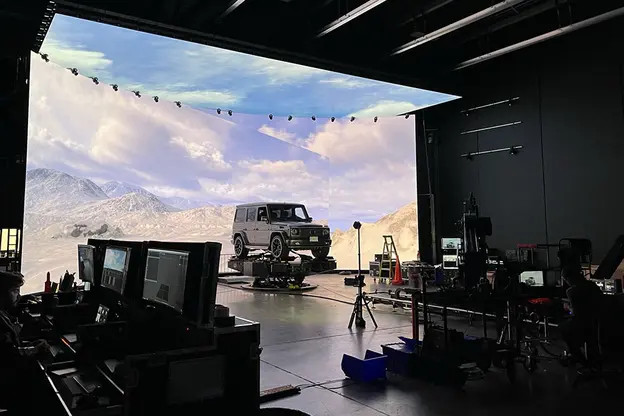
In the modern era of filmmaking, broadcasting, and immersive events, extended reality (XR) has emerged as a transformative force. Zuper LED, a leading Indian LED display innovator, brings its power into this space with Zuper XR, a solution that merges high-fidelity LED video walls, real-time rendering, and camera-tracking to create truly immersive virtual environments.
Zuper XR is Zuper LED’s virtual production offering — an XR-stage ecosystem designed for in-camera visual effects, live production, and immersive storytelling. Rather than relying on green-screen compositing, Zuper XR uses LED volumes that display real-time graphics (often powered by game engines like Unreal Engine), synchronized to camera movement and lighting, to simulate fully virtual environments.
Key technical components include:
Fine-pitch LED displays: Zuper LED’s fine-pitch panels (such as P1.25, P1.53, P2.5, etc.) provide high resolution and smooth visuals, making them well-suited for virtual production and studio settings. zuperled.co.in+2Zuperled+2
Color-accurate, high-refresh screens: For XR stages, refresh rate and color fidelity are crucial to avoid flicker and ensure realistic lighting.
Real-time rendering & tracking: Using a real-time graphics engine (like Unreal) and camera-tracking systems, Zuper XR aligns the virtual background with the camera’s perspective so that any movement of the camera or talent results in dynamically adjusted visuals.
Seamless configurations: The LED panels can be arranged in curved walls, floor panels, or full “volumes” to form 360° immersive environments. Zuper’s fine-pitch LED displays are explicitly tailored for “immersive studios” in its product catalog. zuperled.co.in
Lighting realism: Because the LED walls themselves emit light, they act as practical light sources, casting realistic reflections and ambient color onto actors and props — reducing the need for separate, heavy lighting setups.
In-Camera Effects
By displaying the background on the LED wall, you capture both the actors and their virtual environment in-camera. This reduces reliance on green screens and post-production compositing, significantly streamlining workflows.
Creative Flexibility
Virtual environments can be changed instantly — from alien landscapes to city skylines to abstract dreamscapes — giving directors, cinematographers, and creators the freedom to iterate in real time.
Efficiency & Cost Savings
Traditional set builds, location shoots, and physical production can be expensive and time-intensive. Zuper XR enables you to simulate everything virtually, saving on travel, set construction, and even reshoots.
Improved Lighting Integration
With the LED wall acting as a light source, the virtual scene and physical set blend more naturally. This helps maintain realism and reduces the burden on lighting crews.
Scalability
Whether you’re building a small curved wall for interviews or a large 360° LED volume for feature-film production, Zuper’s modular LED systems can scale to meet your needs.
Here are some real-world use cases where Zuper XR can deliver major value:
In-camera VFX: Use Zuper XR to shoot scenes that would otherwise require green screen or location shoots. Actors perform in a real environment that feels physically present.
Set Extension: Instead of building elaborate sets, producers can display high-quality CG environments behind actors, reducing cost and time.
Dynamic Reshoots: If the director wants to change the background, it can be done digitally between takes — no need to rebuild sets.
News Studios & Talk Shows: Use dynamic XR backdrops that change based on segment — for example, real-time data visualizations, animated graphics, or even virtual environments.
Hybrid Conferences: Hosts can perform on an XR stage that gives remote audiences a visually rich background, and the same XR setup can be used for both in-person and remote broadcast.
Concerts & Performances: LED volumes can create surreal, animated environments that respond to music, camera moves, and performers — making the stage more immersive.
Commercial Shoots: Brands can film ads “on location” in virtual environments without traveling — whether it’s a desert, futuristic city, or outer space.
Product Placement: Show off products in virtual worlds, dynamically changing backdrops for different campaigns.
Corporate Training: Simulate real-world environments (e.g., airports, factories) for training, without risk or physical constraints.
First-Responder / Safety Drills: Use XR to mimic disaster scenarios, medical emergencies, or industrial incidents for realistic, controlled training.
Military / Defense: Simulate complex operations or terrain for training without building physical mock-ups.
Immersive Retail Spaces: Create XR-enabled showrooms where customers can walk into virtual brand worlds, visually enhanced by LED walls.
Pop-up Experience / Brand Activation: Build portable XR volumes for experiential marketing events, letting visitors interact with branded virtual environments.
Art Installations: Artists and creators can design interactive XR installations where spectators walk through changing, responsive LED-powered digital worlds.
While Zuper XR offers many advantages, implementing an XR LED stage brings some challenges:
Technical Complexity: Real-time rendering, camera tracking, color calibration, and synchronization require skilled operators.
High Upfront Costs: Installing an LED volume (walls, floor, tracking) can be expensive — though ROI is often justified for long-term production versus repeated location shoots.
Space Requirements: XR volumes need physical space; studios must accommodate panels, power infrastructure, and safe movement.
Content Creation: Virtual scenes need to be created in 3D engines. This demands artists, designers, and Unreal (or similar) developers.
